Autospend
Overview
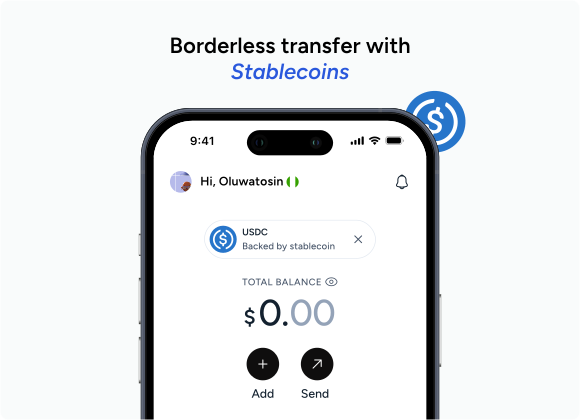
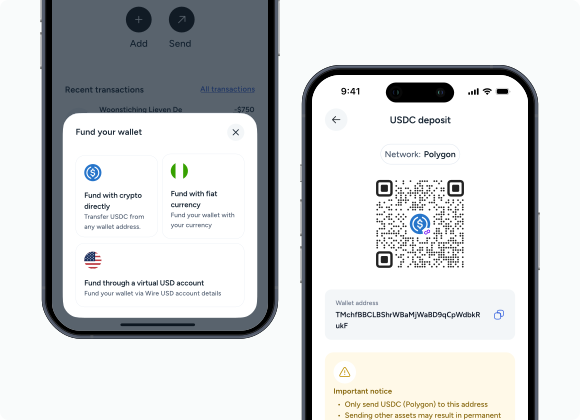
Autospend is a stablecoin spending platform built around one idea: making crypto payments feel as natural as spending regular money. Users can send USDC across borders, manage their balance, and spend with a virtual debit card, all without needing to understand the complexity happening under the hood.
I was the sole designer on the product. I designed everything, from onboarding to cross-border transfers to the card feature. Web and mobile, end to end.
But Autospend didn't start as Autospend.
The pivot
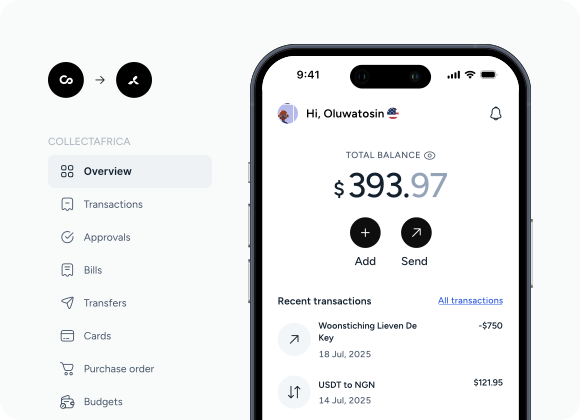
Autospend started as CollectAfrica, a fintech platform I helped build for Nigerian businesses to manage payments, operations, and team workflows in one place. CollectAfrica had a lot of features: user permission levels, paylinks, a store, purchase orders, vendor management, tax compliance. It was a broad platform solving a lot of problems at once.
The stakeholders made the call to pivot. The team stripped away everything that didn't serve the new direction and narrowed the focus to one thing: seamless USDC-based payments. No delays, no complications. What remained became Autospend.
This wasn't just a rebrand. It was a fundamental shift in what the product was for. My job was to take the design system we'd already built and reshape the experience around this tighter focus.
The visual identity carried over, same design system, same language, with a slight refinement to the blue in our palette. There was no reason to rebuild the visual foundation when it already worked. The real work was in rethinking flows, cutting screens, and making a simpler product feel complete rather than stripped down.
Why USDC only
During our research (a mix of user interviews and articles on crypto adoption), we found that the reasons people avoid crypto fall into a few categories: it feels too complicated, they don't trust it, or they don't see the value because it still feels abstract.
Supporting multiple stablecoins would have added unnecessary complexity to an already unfamiliar space. By focusing on USDC alone, we could keep the interface simple and fluid. This was not a technical limitation. It was a deliberate product decision. Every screen, every flow, every label was built around making one currency feel as natural and trustworthy as the fiat money users already understood.
The onboarding problem
Because Autospend bridges crypto and fiat, we had to get compliance right. KYC (Know Your Customer) requirements meant we needed a lot of information from users before they could access the full product.
Two weeks after the first launch, the numbers told us we had a problem: the onboarding drop-off rate was above 80%. We found out through our analytics, and users were also reaching out with complaints, which helped us pinpoint exactly where the friction was.
Two things were happening at the same time. The onboarding form was too long, asking for too much information upfront, and there were technical issues causing friction during the flow. We tackled both in parallel.
I made a fast prototype in Figma, got stakeholder buy-in, and we shipped the update within two weeks. For initial registration, I cut the form down to three fields: name, email, and password. That's enough to get someone into the product and let them see what it offers.
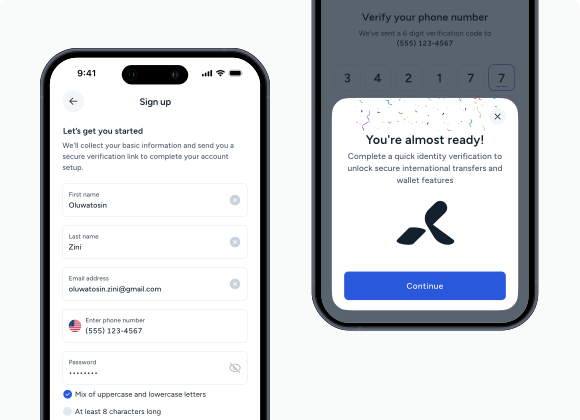
Once inside, users land on a dashboard where a checklist shows them what's still needed to unlock full access. They complete the remaining verification steps at their own pace, on their own terms.
This did two things. It reduced the friction at the front door, and it built trust by letting users experience the product before asking them to hand over sensitive documents. The result: the onboarding drop-off rate dropped from above 80% to under 52%.
That 52% is still high, and I know that. If I had stayed, the next thing I would have tackled is simplifying the post-onboarding info collection process. I believe there was still room to make that smoother. But the trajectory was heading in the right direction, and the team was continuing to refine the flow and fix bugs after I left.
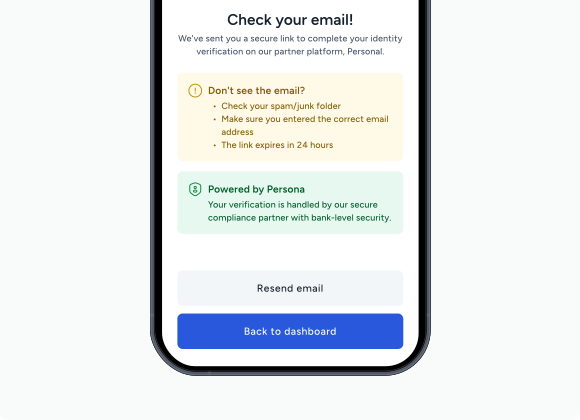
Cross-border payments
Autospend can send funds to over 20 countries. The biggest design challenge was that different countries require completely different account details. Sending money to Nigeria means you need an account number and a bank name. Sending to a country in Europe means you're using an IBAN number and other values entirely. A one-size-fits-all form simply wouldn't work.
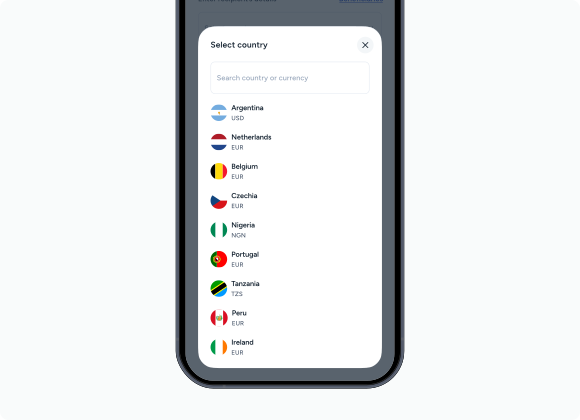
To make this fluid, I broke the payment flow into three phases using progressive disclosure: First, country selection. This works as a progressive load, where the country you pick determines what inputs come next. Second, the amount screen, which shows the conversion from your stablecoin balance to what the recipient will actually receive. Third, a review screen where users can check all the information before confirming.
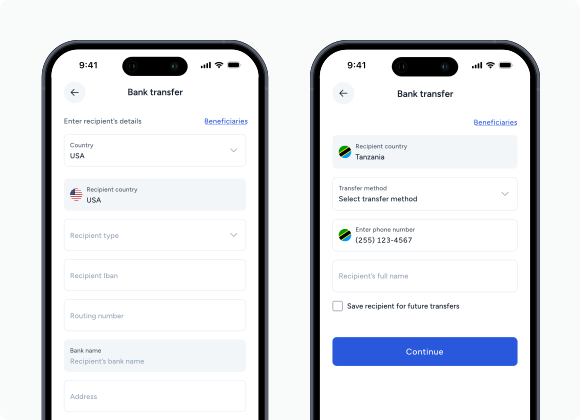
This approach kept each step focused and manageable. Users never see fields that don't apply to them, and they always get a clear picture of what's happening before they commit.
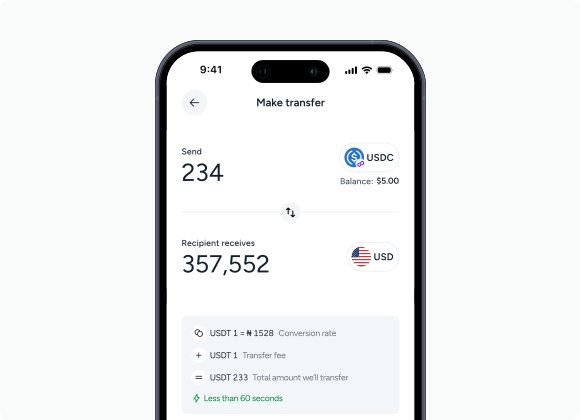
The card feature
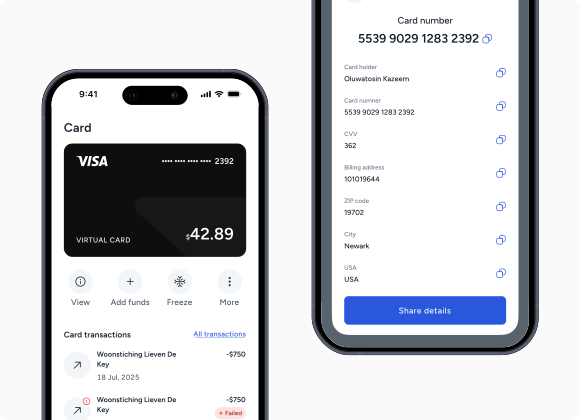
The card feature gives users a virtual debit card that lets them spend their stablecoin balance anywhere that accepts card payments. The end goal was to create a world where people feel comfortable and confident spending crypto the same way they do with fiat.
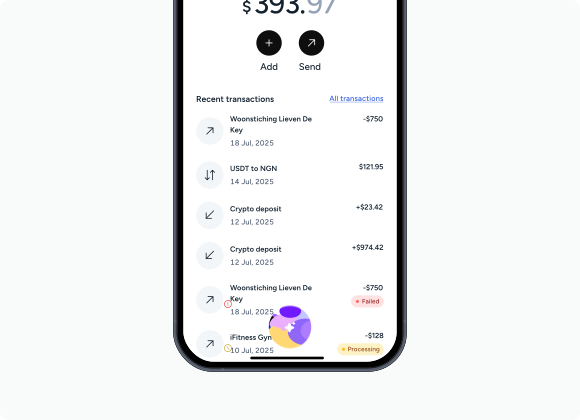
One of the key design decisions was whether to link the card to the user's general wallet or create a separate wallet just for card spending. We had constraints driving this, the payment provider we were using required a separate wallet for the card. But beyond the technical requirement, it actually made for a better experience. A dedicated card wallet made it easier for users to track their card expenses separately from their transfers.
The card creation flow had a few phases I needed to get right: country/region selection, showing the conversion from stablecoin to what the user will get on their card, the funding amount, and a final review phase. Each step was designed to give users clarity on exactly what's happening with their money before they approve anything.
Before I left, the card was virtual only. One of the plans the company had in the pipeline was to offer physical cards as well.
AI-powered payments
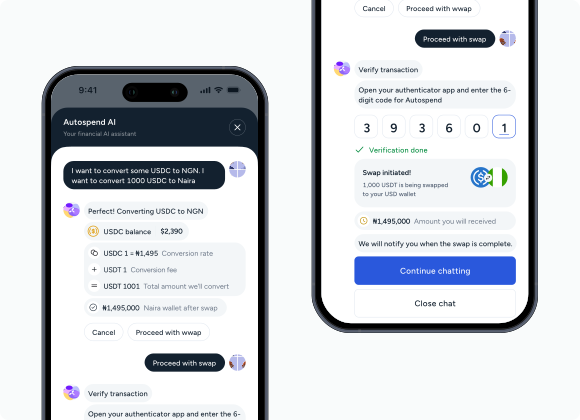
One of the most forward-looking features I worked on was an AI-powered payment interface. The idea was to reduce the number of buttons users need to click by letting them communicate with the app in natural language, like talking to their bank.
We built this in two phases. The first version used a lot of buttons because of technical restrictions we had at the time. On the start screen, users would see a series of action buttons (like "Make Transfer"), click one, and the AI would walk them through the options step by step.
The second version came when the LLM could properly interpret natural language and extract the important information to get things done. Users could just type what they wanted, and the AI would handle the rest. The interface was simple: a chat-style input with structured results from the AI so users could clearly see their transaction details before approving.
This feature went through alpha testing but didn't go public before I left. It's one of the designs I'm most proud of but didn't get to see through to full production.
Beyond the product
My role expanded beyond product design during this project. I was responsible for designing investor decks and presentations, which contributed to CollectAfrica getting accepted into ODX 1 (On Deck Accelerator) in San Francisco. At one point I was also maintaining the CollectAfrica design while simultaneously working on the Autospend redesign, which is when my title changed from Product Designer to Senior Product Designer.
Results
Autospend was still in its early stages when I left, but the numbers were moving in the right direction: Over 1,000 new users since the pivot (excluding existing CollectAfrica users who migrated). Over $1M in transactions processed. Onboarding drop-off reduced from 80%+ to under 52%. Accepted into ODX 1 (On Deck Accelerator), San Francisco (during CollectAfrica phase).
Reflection
The pivot from CollectAfrica to Autospend taught me a lot about letting go. As a designer, you build attachment to features you've spent months on. Watching user permissions, paylinks, vendor management, and everything else get cut was tough. But the product was better for it. A focused tool that does one thing well beats a broad platform that does ten things okay.
The onboarding redesign is the work I'm most proud of from this project. It had a clear problem, a data-informed approach, and a measurable outcome. But I'm also honest that the job wasn't done. 52% drop-off is better than 80%, but it's not good. The best case studies aren't the ones where everything went perfectly. They're the ones where you can show you understood the problem, made progress, and knew what to do next.
If I could go back, I would have pushed harder to simplify the post-onboarding verification flow earlier. The three-field entry was the right first move, but the checklist steps that followed still had friction I wanted to smooth out.